

A Philosophy of Alignment, Function, and Health
Chiropractic care centers on the relationship between spinal alignment, nervous-system communication, and the body’s capacity to function at its best.
The Philosophy of Chiropractic
Chiropractic rests on a foundational principle that sets it apart from virtually every other healthcare discipline: the body is a self-healing, self-regulating organism, and the nervous system is the master controller of that process.
Innate Intelligence
The Major Premise of chiropractic’s 33 Principles holds that a universal intelligence is in all matter and continually gives it properties and actions, thereby maintaining it in existence. In the body, Innate Intelligence is understood as the inborn wisdom that coordinates healing, growth, and adaptation through the nervous system. When the brain and body can communicate clearly, the body is better positioned to adapt, function, and pursue health.
The Subluxation
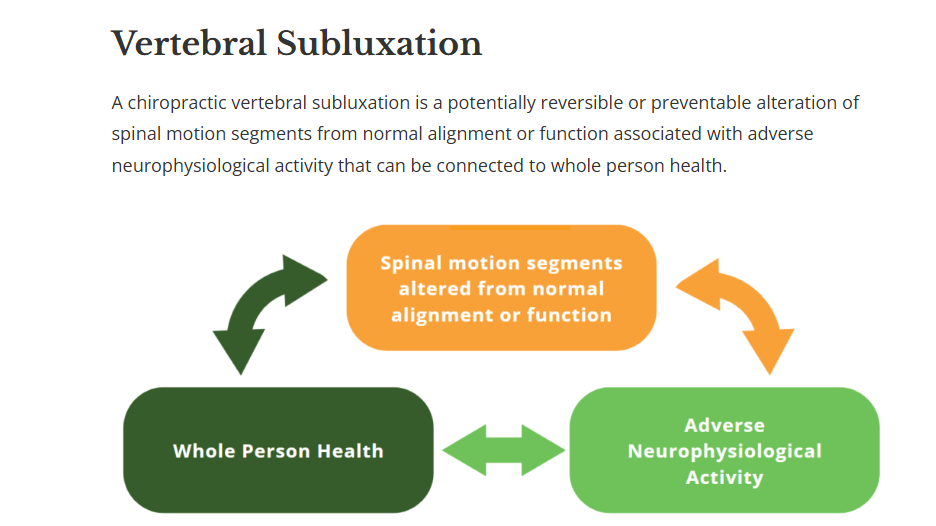
Dysautonomia—an imbalance in autonomic nervous-system regulation—is a key reason to evaluate the spine and nervous system. A vertebral subluxation is a misalignment or dysfunction of the spinal column that may affect normal nerve communication. Chiropractic adjustments are designed to support spinal motion and nervous-system function, with care tailored to the individual and their clinical needs.
Structure Governs Function
Chiropractic recognizes that spinal alignment can influence nervous-system function and the flow of information between the brain and body. This philosophy holds that a spine with proper alignment and healthy movement gives the nervous system the best opportunity to communicate clearly — placing a person on a path toward better function, resilience, and health.
The Body Heals Itself
Unlike pharmaceutical medicine, which introduces external agents to suppress symptoms, chiropractic works with the body's own intelligence. The adjustment does not heal — it removes the interference that was preventing the body from healing itself. This distinction is profound: chiropractic trusts the body, rather than overriding it.
A History of Chiropractic
Chiropractic was born in 1895 in Davenport, Iowa. Since then, the profession has grown into a widely practiced approach to supporting spinal health, movement, and nervous-system function.
The First Adjustment
On September 18, 1895, Daniel David Palmer — a self-taught healer and magnetic therapist — performed the first chiropractic adjustment on Harvey Lillard, a janitor who had been nearly deaf for 17 years after feeling something 'give way' in his back. Palmer manually repositioned a displaced vertebra in Lillard's upper spine. Lillard's hearing was restored. Palmer recognized he had discovered something profound: a direct relationship between spinal alignment and systemic health. He named the new discipline 'chiropractic,' from the Greek words for 'done by hand.'
The Palmer School of Chiropractic
D.D. Palmer founded the Palmer School of Chiropractic in Davenport, Iowa — the first chiropractic college in the world, still operating today as Palmer College of Chiropractic. His son, Bartlett Joshua (B.J.) Palmer, would later take over the school and become the dominant force in developing and promoting chiropractic throughout the early 20th century. B.J. was a visionary promoter, philosopher, and clinician who built chiropractic into a national profession.
D.D. Palmer Jailed for Practicing Medicine
In 1906, D.D. Palmer was arrested and jailed in Davenport for practicing medicine without a license. He served 23 days in jail and paid a fine. This was the opening salvo of what would become a century-long campaign by organized medicine to suppress chiropractic. Chiropractors across the country faced arrest, prosecution, and imprisonment — yet the profession continued to grow, driven by patient results that conventional medicine could not match.
Spears Chiropractic Hospital — Denver, Colorado
In 1944, Dr. Leo Spears opened Spears Chiropractic Hospital in Denver, Colorado — the first and only chiropractic hospital in the United States. At its peak, Spears Hospital treated thousands of patients annually, including cases of polio, cancer, heart disease, and other serious conditions that conventional medicine had failed to resolve. The hospital operated for decades, demonstrating that chiropractic care could be delivered in a full inpatient hospital setting with remarkable clinical outcomes. It stood as a living proof of concept for chiropractic's broader healing potential — and a direct threat to the medical establishment's monopoly on hospital-based care.
Chiropractic Education Takes Root
As chiropractic grew, dedicated colleges and professional organizations helped establish formal education, clinical training, and shared standards for the profession. The Palmer School in Davenport remained an important early center of chiropractic education, while additional schools opened across the country to prepare practitioners in anatomy, physiology, spinal analysis, and hands-on adjusting methods.
Licensure Expands Across the United States
Over several decades, states established chiropractic licensing laws and regulatory boards. These developments recognized chiropractic as a distinct healthcare profession and created standards for education, examination, and professional practice. Today, chiropractic is licensed in all 50 states, helping patients access care focused on the spine, movement, and musculoskeletal health.
A Broader Toolkit for Patient Care
Chiropractors continued to refine techniques designed to meet a range of patient needs and preferences. Approaches such as diversified adjusting, flexion-distraction, instrument-assisted adjusting, and low-force techniques gave practitioners more ways to support spinal motion and comfort. This expansion made it possible to tailor care for people seeking a hands-on adjustment as well as those who prefer gentler instrument-based approaches.
Research, Technology, and Individualized Care
Modern chiropractic combines a long-standing focus on spinal function with contemporary assessment tools, digital imaging when clinically appropriate, and continuing education. Research on spinal manipulation has contributed to clinical guidelines for certain musculoskeletal concerns, while advances in tables and adjusting instruments allow care plans to be adapted to a patient’s goals, comfort, and movement needs.
Chiropractic in the Modern Era
Today, chiropractic is a widely available, non-surgical approach to supporting spinal health, mobility, and musculoskeletal well-being. The profession continues to evolve through clinical education, research, and a range of techniques — including Cox Flexion Distraction, ArthroStim, Torque Release, and Zone Technique — while maintaining a central focus on helping patients move, function, and feel their best.
Why Chiropractic Matters
Chiropractic care is grounded in a simple philosophy: support the body by helping the spine and nervous system function as well as possible. By focusing on alignment, movement, and clear communication throughout the nervous system, chiropractic care can be part of a proactive path toward better health, comfort, and everyday function.
Experience Chiropractic for Yourself
The best way to understand what chiropractic can do is to experience it. We invite you to begin your journey at Vital Steps Chiropractic.